There’s a strange kind of pressure attached to placement season. Even confident students start second-guessing themselves once interview rounds begin. One awkward answer, one unexpected technical question, one moment of nervous silence — suddenly everything feels heavier than it probably should.
And honestly, most students don’t struggle because they completely lack knowledge. They struggle because interviews are uncomfortable situations. Speaking clearly under pressure is a skill of its own.
That’s probably why AI-powered mock interview platforms are gaining attention so quickly now. Students preparing for placements want practice that feels realistic, flexible, and available anytime — not just during occasional college workshops.
Naturally, people have started asking: AI-generated mock interviews students ki placement preparation me kitne useful hain? The answer, surprisingly, is more positive than many expected.
The Biggest Problem: Lack of Real Practice
One issue with traditional placement preparation is that students often prepare theoretically but not conversationally.
They memorize HR answers, revise aptitude formulas, maybe solve coding questions, but rarely sit through actual interview simulations repeatedly. Then during the real interview, nervousness takes over.
AI mock interview systems try to bridge that gap.
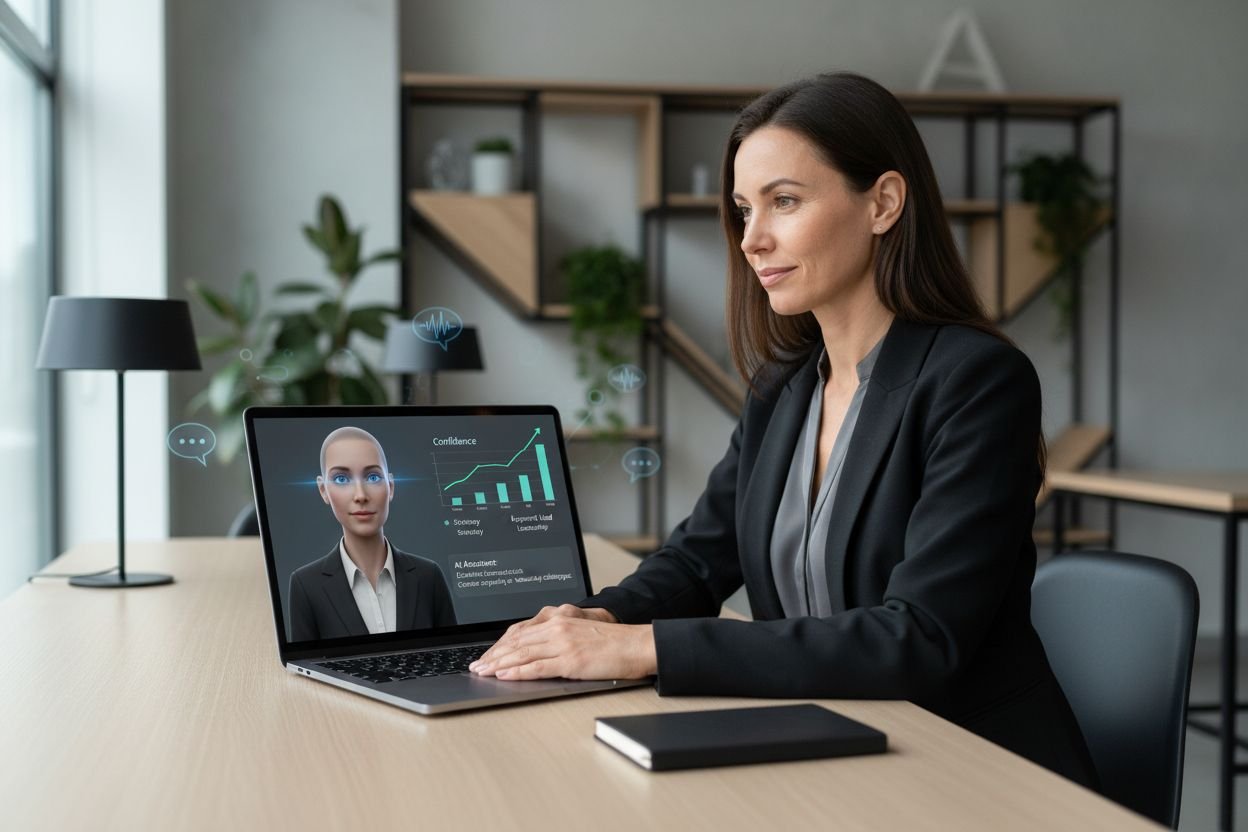
Instead of simply reading interview questions from PDFs, students interact with platforms that ask questions dynamically, analyze responses, track pauses, evaluate speaking confidence, and sometimes even assess facial expressions or communication tone.
It’s not perfect, obviously. But it creates exposure. And exposure reduces fear.
Students Can Practice Without Feeling Judged
This matters more than people admit.
Many students hesitate to practice interviews with friends or teachers because they feel embarrassed making mistakes publicly. They worry about speaking awkwardly, forgetting answers, or sounding underprepared.
AI systems remove some of that social pressure.
A student can attempt five interviews in one night, fail repeatedly, restart again, and nobody laughs or interrupts. That private repetition builds familiarity over time.
And honestly, confidence often comes from repetition more than talent.
Accessibility Is a Huge Advantage
Traditional mock interviews require mentors, trainers, or placement cells with limited schedules. Not every student has access to experienced interviewers regularly, especially in smaller colleges or Tier-2 cities.
AI tools are available anytime.
A student preparing at midnight before an internship interview can still practice. Someone weak in communication can rehearse introductions multiple times without depending on another person’s availability.
That flexibility alone makes these tools valuable for many learners.
Especially in India, where competition during placements can become intense, affordable access to interview preparation creates a noticeable advantage.
Technical Interviews Become Less Intimidating
Many AI platforms now simulate technical interviews too. Students can practice coding explanations, debugging conversations, system design basics, or subject-related discussions.
This is useful because technical interviews are rarely just about solving problems. Interviewers usually observe thought process, communication clarity, and confidence while approaching a problem.
Students who practice verbal explanation regularly tend to perform better under pressure.
Interestingly, AI-generated mock interviews students ki placement preparation me kitne useful hain? becomes easier to answer when you notice how many students freeze not because they lack answers, but because they panic while speaking.
AI practice helps normalize that environment.
The Feedback Loop Is Surprisingly Helpful
One underrated feature of AI mock interview platforms is instant feedback.
Humans conducting mock interviews may forget details or give generic comments. AI systems, however, often provide structured observations immediately:
- Speaking too fast
- Frequent filler words
- Weak eye contact
- Long pauses
- Unclear technical explanation
- Low confidence score
Some tools even compare performance improvement over time.
Now, of course, AI feedback isn’t always emotionally intelligent. Sometimes the analysis feels overly mechanical. But even basic awareness helps students notice habits they didn’t realize they had.
And once you notice something, improving it becomes easier.
They Still Can’t Fully Replace Human Interviews
This is important.
AI mock interviews are helpful, but they are not magic substitutes for real human interaction. Actual interviewers behave unpredictably. They interrupt. They change tone suddenly. They ask confusing follow-up questions. Sometimes they casually test emotional stability without making it obvious.
AI systems still struggle to recreate the emotional complexity of real conversations fully.
Human interviewers also pick up subtle personality traits — authenticity, curiosity, humility, adaptability — that machines may not evaluate accurately yet.
So students relying only on AI preparation might still face surprises during actual placement rounds.
The Best Approach Is Probably a Hybrid One
Honestly, the smartest students seem to use AI as a preparation layer, not the final solution.
They practice fundamentals through AI tools:
- Self-introductions
- HR questions
- Technical explanations
- Communication confidence
- Speaking fluency
Then they combine that with real discussions with seniors, mentors, professors, or peers.
That combination works well because AI provides consistency while humans provide realism.
Placement Anxiety Is Also Emotional
Something else often gets ignored during placement preparation — emotional fatigue.
Students compare packages, track rejection stories, overthink every interview result, and carry enormous expectations from family or peers. Stress levels quietly build in the background.
Practicing through AI systems can reduce some uncertainty because students feel more prepared entering interviews. Even psychologically, preparation creates calmness.
And sometimes that calmness alone improves performance significantly.
Final Thoughts
So, are AI-generated mock interviews genuinely useful for placement preparation? In many ways, yes.
They may not fully replace real interview experiences, but they absolutely help students become more comfortable with the process. Better speaking practice, instant feedback, flexible timing, and reduced fear of mistakes make them surprisingly practical.
More importantly, they make interview preparation more accessible to students who previously lacked consistent guidance.
At the end of the day, placements are rarely just about knowledge. They’re about presenting knowledge confidently under pressure. And if AI tools can help students feel slightly more prepared walking into that room, they’re already serving an important purpose.