Smart cities sound futuristic when people first hear the term. Images of self-driving cars, intelligent traffic systems, automated streetlights, connected surveillance, and instant public services usually come to mind. But behind all that flashy technology sits something much less glamorous — data processing.
And honestly, that’s where things become complicated.
Modern cities generate enormous amounts of data every second. Traffic cameras, pollution sensors, parking systems, metro networks, water management systems, emergency services, and connected devices constantly collect information. If every piece of that data had to travel back and forth from distant cloud servers before decisions were made, cities would slow down badly.
That’s exactly why edge computing is getting so much attention now.
Instead of sending everything far away for processing, edge computing allows data to be processed much closer to where it’s actually generated. And surprisingly, this small architectural shift changes urban efficiency in a very big way.
Which naturally leads to the growing question: Edge computing smart cities ko faster aur efficient kaise bana raha hai?
The answer touches almost every part of modern urban infrastructure.
The Problem With Traditional Cloud Systems
Cloud computing transformed technology over the past decade, but smart cities introduced a scale problem.
Imagine a busy traffic intersection in a large city. Cameras continuously monitor vehicle movement, pedestrian crossings, accidents, and congestion patterns. If every video feed travels to a centralized server before analysis happens, even tiny delays can create issues.
For applications requiring real-time decisions, milliseconds matter.
Traffic systems can’t always afford long processing delays. Neither can emergency response systems, autonomous transport networks, or public safety infrastructure.
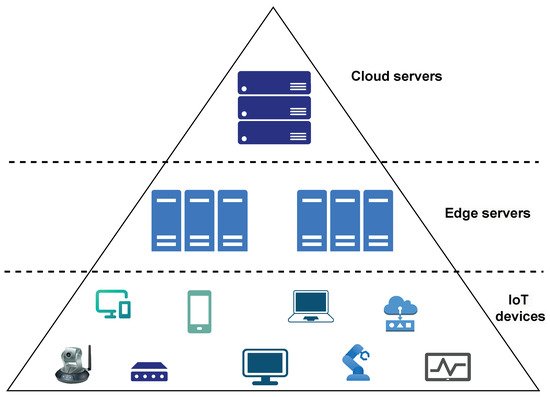
That’s where edge computing becomes valuable. It processes critical information locally instead of relying entirely on distant cloud servers.
Speed Changes Everything in Urban Systems
One of the biggest advantages of edge computing is reduced latency.
In simpler words, systems respond faster because data doesn’t need to travel unnecessarily long distances before action happens.
For example:
- Smart traffic lights can adjust immediately based on congestion
- Surveillance systems can detect unusual behavior faster
- Emergency alerts can trigger instantly
- Smart grids can balance electricity usage in real time
- Connected public transport systems can optimize routes dynamically
Those improvements may sound technical, but they directly affect daily city life.
Less waiting. Faster responses. Smoother movement.
And honestly, city residents notice efficiency long before they understand the technology creating it.
Smart Cities Generate Massive Data Volumes
Modern urban infrastructure creates astonishing amounts of information constantly.
Think about everything happening simultaneously:
- CCTV footage
- Air quality monitoring
- Vehicle tracking
- Public Wi-Fi usage
- Smart parking systems
- Water supply monitoring
- Energy consumption tracking
- Weather sensors
- Public transport analytics
Sending every bit of that data continuously to centralized cloud systems becomes expensive, slow, and bandwidth-heavy.
Edge computing reduces that pressure by filtering and processing important information locally first. Only necessary data gets forwarded for deeper analysis or storage later.
That efficiency saves both time and infrastructure costs.
Real-Time Decision Making Matters More Than Ever
The more connected cities become, the more they depend on immediate reactions.
For example, if a smart city system detects:
- An accident
- Flooding risk
- Fire hazards
- Suspicious crowd movement
- Sudden traffic congestion
…waiting several seconds for cloud processing may already feel too slow.
This is one reason Edge computing smart cities ko faster aur efficient kaise bana raha hai? has become such an important discussion among urban technology planners globally.
Cities increasingly rely on systems capable of thinking and responding locally without always depending on centralized infrastructure.
Privacy and Security Also Improve
Interestingly, edge computing isn’t only about speed. It can also improve data privacy in certain situations.
When data gets processed closer to the source, less raw information needs to travel across broader networks continuously. Sensitive information can sometimes remain partially localized instead of constantly moving through centralized systems.
That matters because smart cities naturally raise surveillance and privacy concerns.
People become uncomfortable when massive amounts of personal behavioral data move endlessly through external servers. Edge computing offers partial solutions by limiting unnecessary data transmission in some cases.
Of course, it doesn’t magically solve every privacy issue. But it helps reduce certain risks.
India’s Smart City Push Could Benefit Strongly
Countries like India may particularly benefit from edge computing because urban populations are growing rapidly while infrastructure pressure keeps increasing.
Indian cities already deal with:
- Traffic congestion
- Power management challenges
- Pollution monitoring needs
- Public transport complexity
- Emergency coordination difficulties
Smart city projects aiming to improve these systems need fast, scalable, and cost-efficient technological infrastructure.
Edge computing fits naturally into that requirement because it allows local processing even in environments where network reliability or bandwidth may fluctuate occasionally.
Instead of relying entirely on distant centralized systems, localized intelligence creates more resilience.
It’s Not a Complete Replacement for Cloud Computing
One common misunderstanding is that edge computing replaces cloud infrastructure entirely.
It doesn’t.
The reality is more collaborative.
Cloud systems still remain essential for:
- Large-scale analytics
- Long-term data storage
- AI model training
- Cross-city coordination
- System-wide optimization
Edge computing simply handles time-sensitive processing closer to devices while cloud infrastructure manages broader analysis and storage needs.
Think of it as division of labor rather than competition.
Challenges Still Exist
Of course, edge computing isn’t magically simple either.
Deploying local processing infrastructure across entire cities requires:
- Investment
- Reliable hardware
- Cybersecurity planning
- Maintenance systems
- Skilled technical management
Managing thousands of decentralized computing nodes can become operationally complex quickly.
There’s also the issue of standardization. Different devices, systems, and vendors often struggle to integrate smoothly within large smart city ecosystems.
So while the technology sounds promising, execution quality still matters enormously.
Final Thoughts
Edge computing is becoming a crucial part of smart city infrastructure because cities increasingly depend on real-time responsiveness. Faster processing, lower latency, reduced bandwidth pressure, and localized intelligence all help urban systems function more smoothly.
But beyond technical benefits, the larger goal is actually very human.
People simply want cities that feel less frustrating to live in — with smoother traffic, quicker emergency response, efficient utilities, and better public services.
Edge computing quietly supports those experiences in the background. Most residents may never directly notice the technology itself. They’ll just notice when city systems stop feeling painfully slow and disconnected.
And honestly, that invisible efficiency might be the real future of smart cities.