A decade ago, most people searching for property in India focused on fairly straightforward things: square footage, parking space, water supply, nearby schools, and maybe how far the office commute would be. Residential areas were residential. Commercial zones were commercial. Malls, offices, cafés, and apartments existed separately.
But urban living doesn’t feel that simple anymore.
Modern city life has become faster, more crowded, and honestly a little exhausting. Long commutes drain energy. Traffic eats up hours daily. People increasingly want convenience built directly into where they live rather than constantly traveling across the city for basic needs.
That’s exactly why mixed-use developments are suddenly becoming such a major real estate trend. And naturally, many buyers are asking: India me mixed-use developments property buyers ko kyun attract kar rahe hain?
The answer has a lot to do with lifestyle shifts, changing work culture, and how urban Indians now define “comfortable living.”
What Exactly Is a Mixed-Use Development?
In simple terms, mixed-use developments combine different types of spaces inside one integrated project.
Instead of only residential apartments, these developments may include:
- Offices
- Retail stores
- Restaurants
- Entertainment spaces
- Co-working areas
- Cafés
- Gyms
- Hotels
- Medical facilities
- Public spaces
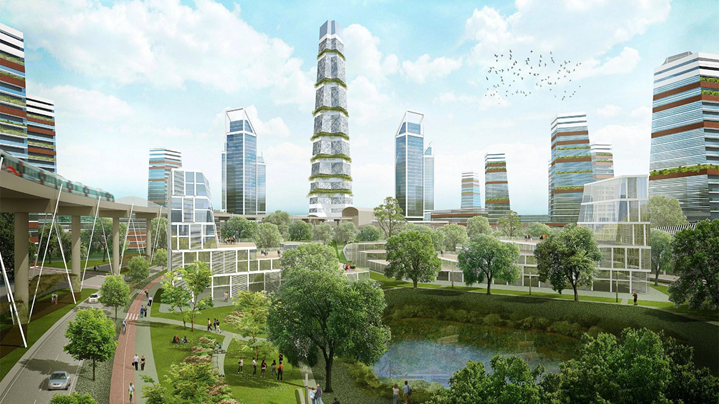
The idea is to create self-sustained environments where daily life feels more connected and less dependent on constant travel.
Some projects almost function like mini-cities inside larger cities.
Convenience Has Become a Luxury
One major reason buyers are drawn toward these developments is convenience.
Urban life in India can become physically and mentally draining very quickly. Spending two hours in traffic just to access work, shopping, or leisure activities slowly affects quality of life more than people initially realize.
Mixed-use developments reduce some of that friction.
Imagine living in a residential tower where:
- Your office is downstairs
- Grocery stores are nearby
- Cafés are walkable
- Gym access takes two minutes
- Basic entertainment exists inside the same ecosystem
That level of accessibility feels extremely appealing, especially for younger working professionals and families juggling busy schedules.
Work Culture Changed Everything
The rise of hybrid work and flexible office culture accelerated this trend significantly.
Earlier, people mainly chose homes based on proximity to one fixed office location. But now work patterns are more fluid. Some people work remotely part-time, visit co-working spaces occasionally, or run businesses digitally.
As a result, buyers increasingly prioritize overall lifestyle ecosystems instead of purely commuting distance.
That’s one reason India me mixed-use developments property buyers ko kyun attract kar rahe hain? has become such an important question in the real estate market lately.
People are no longer buying just apartments. They’re buying convenience, accessibility, and time savings.
Younger Buyers Think Differently About Living Spaces
Millennials and Gen Z property buyers often approach real estate differently than previous generations.
Older buyers frequently prioritized ownership stability and long-term family settlement. Younger buyers still value those things, but they also care heavily about:
- Walkability
- Lifestyle integration
- Community spaces
- Social infrastructure
- Modern amenities
- Flexibility
Many younger professionals prefer environments where work, leisure, dining, fitness, and social interaction coexist naturally.
Mixed-use developments fit perfectly into that mindset.
In some ways, these projects feel less isolated than traditional gated communities because they create more everyday movement and interaction.
Developers Also Benefit Financially
This trend isn’t only attractive for buyers. Developers see strong advantages too.
Projects that combine residential and commercial components often create multiple revenue streams simultaneously. Retail spaces increase foot traffic, office spaces attract professionals, and residential demand grows because of surrounding infrastructure.
Commercial activity also improves long-term property value in many cases.
That’s why several large developers in cities like Bengaluru, Mumbai, Hyderabad, Gurugram, and Pune are investing aggressively in integrated township-style developments now.
The market clearly sees long-term potential here.
They Create a More “Global” Urban Experience
There’s also a psychological factor behind this trend.
Many Indian buyers exposed to international urban lifestyles through travel, movies, or social media are increasingly attracted to spaces that feel globally designed. Mixed-use developments often resemble urban districts seen in cities like Singapore or Dubai, where residential, commercial, and lifestyle spaces blend naturally together.
That modern, connected environment feels aspirational for many buyers.
It’s not only about property anymore. It’s about identity and lifestyle positioning too.
But They’re Not Perfect for Everyone
Of course, mixed-use living isn’t universally ideal.
Some people still prefer quieter residential neighborhoods without heavy commercial movement nearby. Increased foot traffic, parking pressure, and busier surroundings can become concerns depending on how well the project is planned.
Poorly managed mixed-use developments may also struggle with maintenance complexity because residential and commercial interests sometimes conflict.
For example:
- Residents may want peace
- Retail businesses want crowds
- Office users create parking demand
- Restaurants increase activity late at night
Balancing those needs requires smart planning and strong management systems.
Infrastructure Will Decide Long-Term Success
Another important factor is urban infrastructure.
Mixed-use developments work best when supported by:
- Reliable roads
- Public transport
- Parking management
- Water supply
- Waste management
- Security systems
Without proper infrastructure planning, these projects can easily become overcrowded or stressful rather than convenient.
India’s urban expansion still faces infrastructure gaps in many cities, so execution quality matters enormously.
Final Thoughts
Mixed-use developments are attracting Indian property buyers because modern urban life has changed fundamentally. People now value time, accessibility, flexibility, and convenience more than ever before.
Instead of separating work, shopping, entertainment, and residential life completely, buyers increasingly prefer integrated environments that simplify daily routines.
That doesn’t mean every mixed-use project automatically succeeds. Planning quality still matters enormously. But the larger trend seems clear: Indian real estate is moving toward more connected, lifestyle-driven urban spaces.
And honestly, in cities where traffic alone can steal several hours every week, the idea of living closer to everything suddenly feels less like luxury — and more like sanity.