There’s a certain kind of household problem you notice only after it has been happening for a while. Your glasses look cloudy. Soap doesn’t seem to rinse properly. The shower feels different, and maybe there’s a faint crust around the faucet that wasn’t there a few months ago. You wipe it away, but it comes back.
Hard water has a funny way of becoming part of the background until the signs are impossible to ignore.
A properly sized and maintained water softener can make a surprisingly big difference. It helps reduce minerals such as calcium and magnesium before they travel through your plumbing, appliances, showers, and sinks. But installing a softener isn’t simply a matter of connecting a few pipes and hoping for the best. The system needs to match your home’s water quality, household demand, and plumbing setup.
And once it’s running, it needs a little attention now and then.
Why Hard Water Creates Everyday Problems
Hard water isn’t usually an emergency, but over time it can become an expensive nuisance. Calcium and magnesium can leave mineral deposits on plumbing fixtures, showerheads, glassware, and appliances that use water regularly.
You may notice white spots on dishes or a chalky ring around the sink. Laundry can feel stiff even after a normal wash. Some people also find that shampoo and soap don’t lather as easily as they should.
The bigger concern is what happens where you can’t see it.
Mineral scale can gradually build inside pipes, water heaters, dishwashers, washing machines, and other equipment. That buildup can restrict water flow and reduce efficiency. A water heater, for instance, may have to work harder when sediment and mineral deposits collect inside the tank.
That’s why treating hard water isn’t just about making the water feel nicer. It can also be part of taking better care of the home.
Choosing the Right Water Softener
Not every water softener is right for every house. This is where a little homework can save you from an expensive mistake.
Before choosing a system, it’s useful to understand your water hardness, household water consumption, and the number of people using the system. Well water may also contain other issues that need attention, such as iron, sediment, sulfur odors, or unusual mineral content.
A professional water test can provide a much clearer picture.
Once you know what you’re dealing with, water softener installation becomes a more thoughtful process rather than simply picking a unit from a shelf. The system should be correctly sized, installed according to local plumbing requirements, and positioned where it can be accessed for future servicing.
A good installation also considers drainage, electrical requirements when applicable, bypass valves, and the home’s existing plumbing.
It may not sound exciting, but these details matter. A well-installed system should quietly do its job without becoming another household headache.
What Professional Service Actually Involves
Even a quality water softener can develop problems. Maybe the regeneration cycle stops working. Perhaps the brine tank isn’t drawing water correctly. You might suddenly notice that the water feels hard again despite the system appearing to operate normally.
This is where water softener service can be useful.
A trained technician can inspect the system, check valves and controls, examine the brine tank, look for leaks, and evaluate whether the softener is regenerating properly. Depending on the equipment, they may also check settings and water usage patterns.
Sometimes the problem is surprisingly simple. A clogged injector, incorrect setting, salt bridge, or worn component can affect performance. Other times, the system may simply be too small for the household’s current needs.
That distinction matters. Replacing a system that only needed a minor repair is a waste of money. Continuing to repair an aging unit that has reached the end of its useful life isn’t particularly smart either.
The Salt Isn’t the Whole Story
One common misconception is that maintaining a softener means checking the salt and topping it up.
Salt is important, of course, but it’s only one part of the picture.
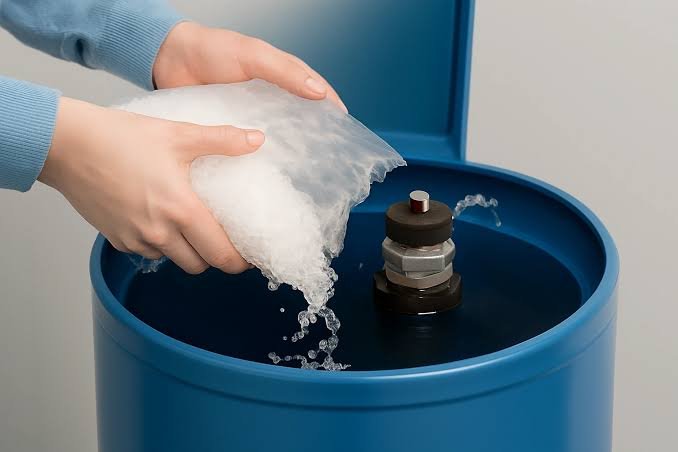
Salt bridges can form inside the brine tank, creating a hard layer that prevents the salt from dissolving properly. Excessive salt buildup, low water levels, clogged components, or mechanical issues can also interfere with regeneration.
Some modern systems monitor water use and regenerate based on demand, while older or simpler models may operate on preset schedules. Understanding which type you have makes troubleshooting much easier.
It’s also worth remembering that adding more salt isn’t always the answer. If the system isn’t regenerating correctly, piling in another bag won’t magically solve the problem.
Simple Maintenance Can Prevent Bigger Headaches
Most homeowners don’t need to become water-treatment experts. Still, paying attention to a few basic things can keep the system working more reliably.
Regular water softener maintenance can include checking salt levels, inspecting the brine tank, looking for leaks, cleaning components when recommended by the manufacturer, and making sure the system isn’t accidentally left in bypass mode.
It’s also smart to pay attention to changes in your water.
If dishes suddenly develop spots, soap behaves differently, or scale starts appearing again, don’t simply assume the system has failed. Those signs can point to several different issues, including changes in incoming water quality or incorrect settings.
Keeping a simple maintenance schedule helps, too. A quick inspection every so often is much easier than discovering a problem after it has damaged another appliance.
When Replacement Makes More Sense Than Repair
Water softeners aren’t immortal. Eventually, seals wear out, controls become unreliable, resin loses effectiveness, or replacement parts become difficult to find.
If your system requires frequent repairs, uses unusually large amounts of salt, or no longer produces consistently soft water, it may be time to compare repair costs with replacement.
Technology has also changed. Newer systems can offer more efficient regeneration, better monitoring, and smarter water usage. That doesn’t mean everyone needs the latest model, though. A dependable older unit that’s correctly sized and maintained may still serve a home perfectly well.
The goal isn’t to buy the most complicated system. It’s to have one that suits your water and your household.
Pay Attention Before Small Signs Become Big Problems
Water is easy to take for granted. We turn on a tap, take a shower, run the dishwasher and move on with the day. But the condition of that water can affect a surprising number of things around the house.
If hard water has started leaving stains, creating scale, or making appliances work harder, a properly selected water softener may be worth considering. And if you already have one, don’t wait for a complete breakdown before giving it some attention.
A little maintenance, the occasional professional inspection, and an honest look at how the system is performing can go a long way.
After all, the best water-treatment equipment is usually the equipment you barely have to think about. It simply works in the background, protecting your plumbing and making everyday water a little easier to live with.:::